Bethlehem, Lehigh Valley · Stage: Planning phase
Play, learn and enjoy nature together.
Bethlehem Discovery Park is a community project, in its planning phase, for a welcoming, affordable family place: playgrounds for every age, gardens and meadows, hands-on learning, music on the lawn, and perhaps a carousel and a few family rides. A good day out together shouldn’t cost much. This site lets families and neighbors see the plan, its sources and what is still unknown, and share ideas.
 (opens the full-size drawing in a new tab)
See the park
One sample illustration for each area, to show how it could feel. They are drawings, not designs: nothing has been designed or built yet. Select a drawing to see it full size.
 (opens the full-size drawing in a new tab)
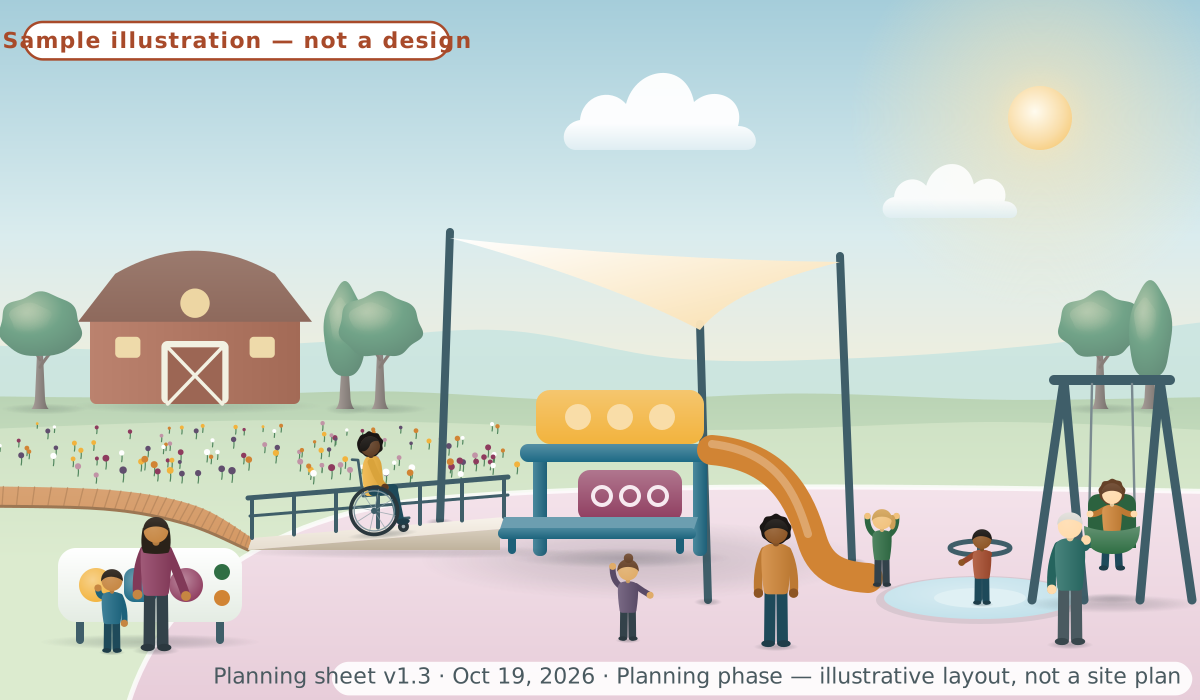
Inclusive playgroundPlay for every age and ability: an accessible ramp, a ground-level spinner, a supportive swing and shade.Sample illustration — not a design Scale A · Small Public Discovery Park (pilot)
 (opens the full-size drawing in a new tab)
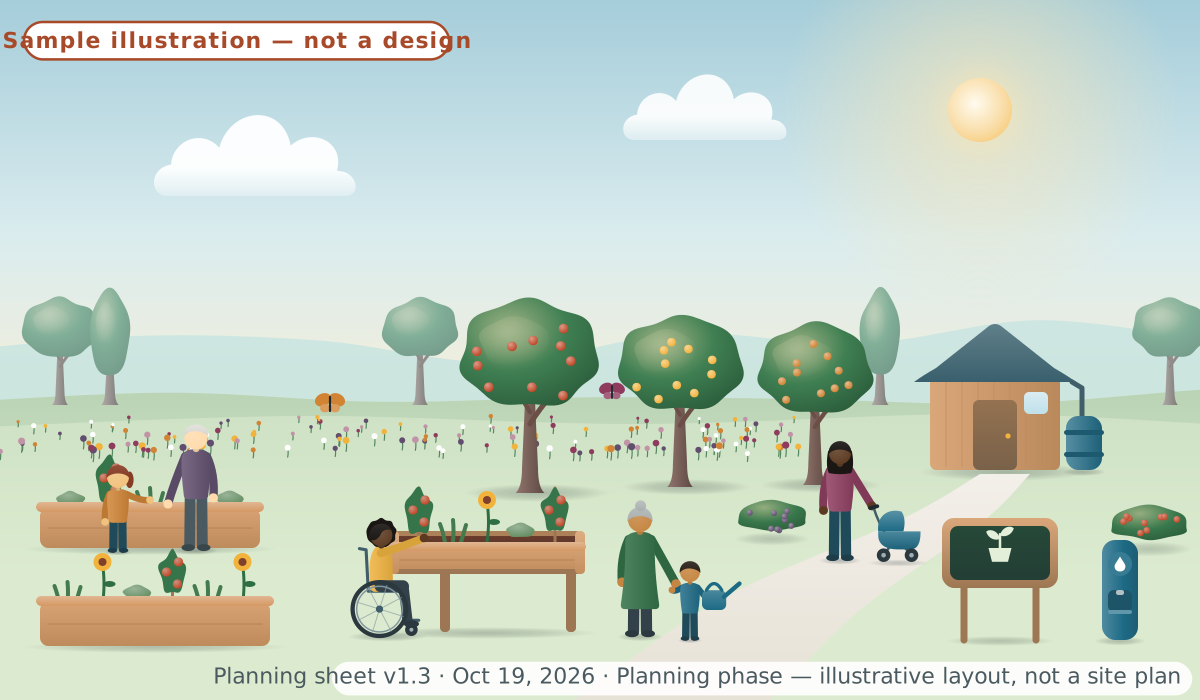
Learning, fruit and vegetable gardensRaised beds at different heights, fruit trees and berry bushes, with harvests shared through the food and water hub.Sample illustration — not a design Scale A · Small Public Discovery Park (pilot)
 (opens the full-size drawing in a new tab)
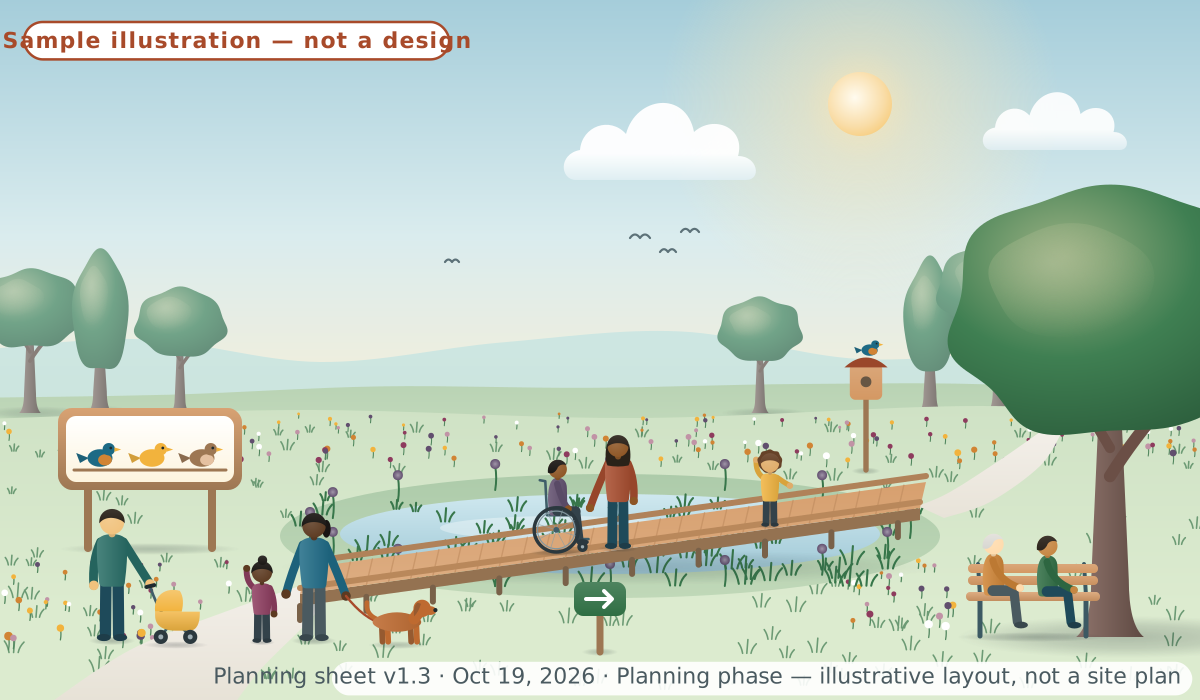
Nature trail and meadow loopA firm, accessible walking loop and a short boardwalk over a rain garden, with a shaded bench. Pets are welcome on a leash where it’s safe.Sample illustration — not a design Scale A · Small Public Discovery Park (pilot)
 (opens the full-size drawing in a new tab)
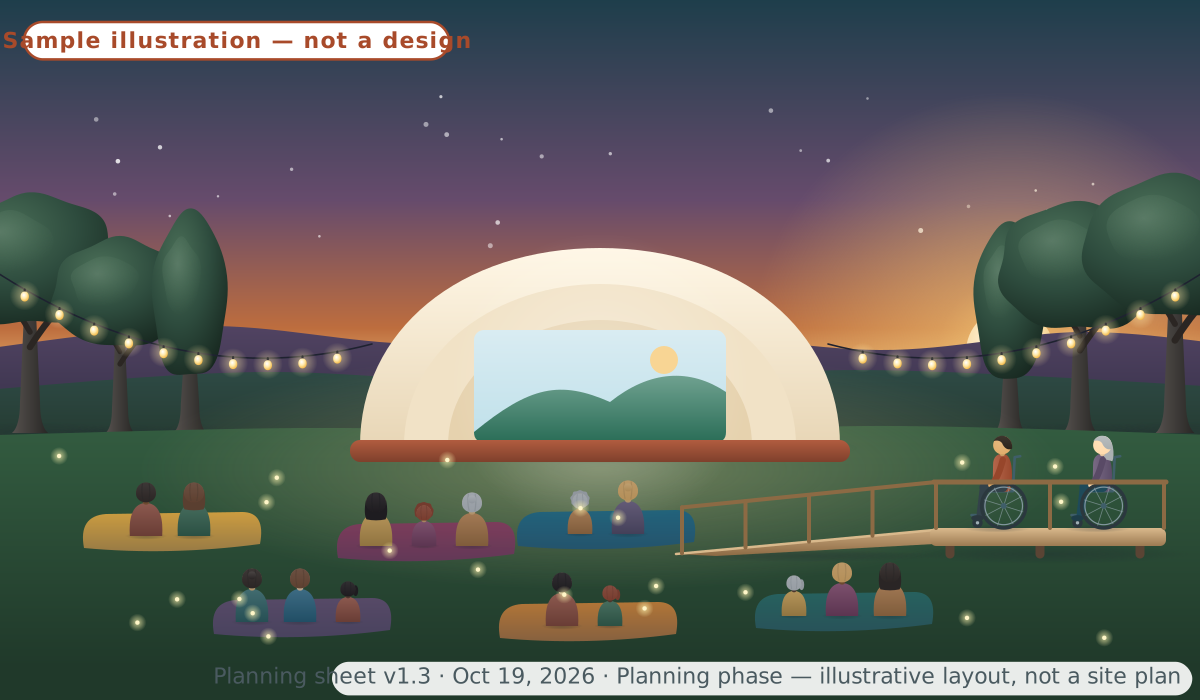
Event lawnA lawn for music, films and seasonal events, with an accessible viewing platform.Sample illustration — not a design Scale A · Small Public Discovery Park (pilot)
- (opens the full-size drawing in a new tab)
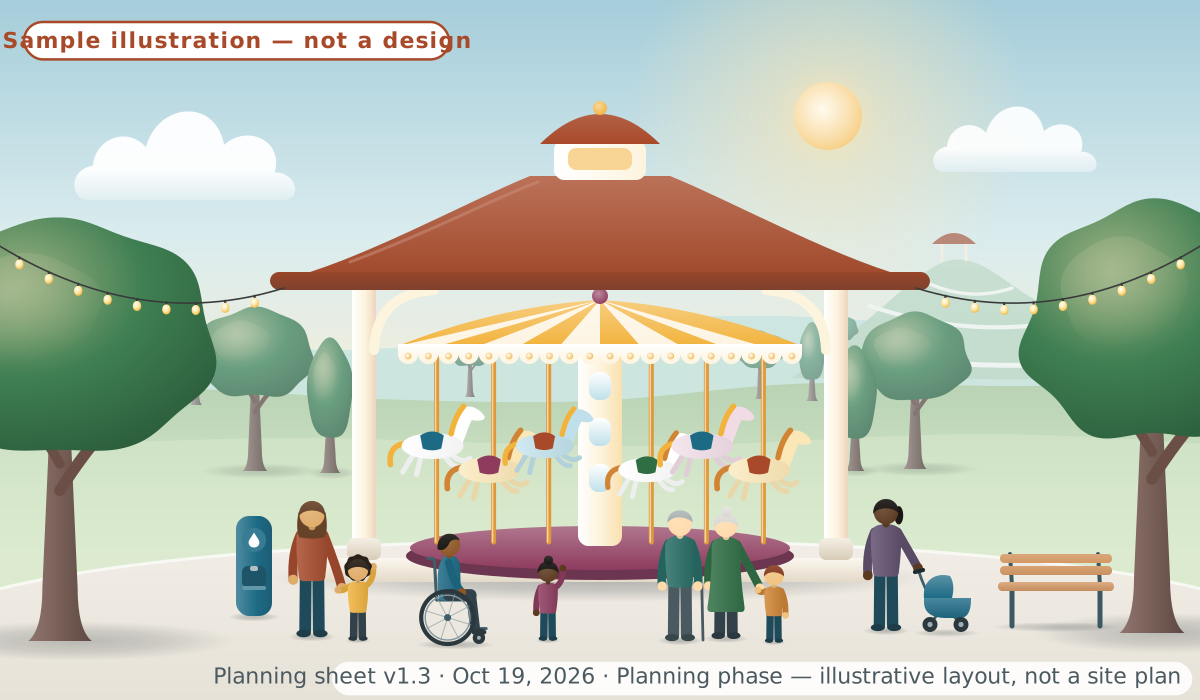
Carousel pavilionOnly in the family park, a later stage, if the pilot meets its targets. It may never happen.Sample illustration — not a design Scale B · Family Attraction Park, a later stage
 (opens the full-size drawing in a new tab)
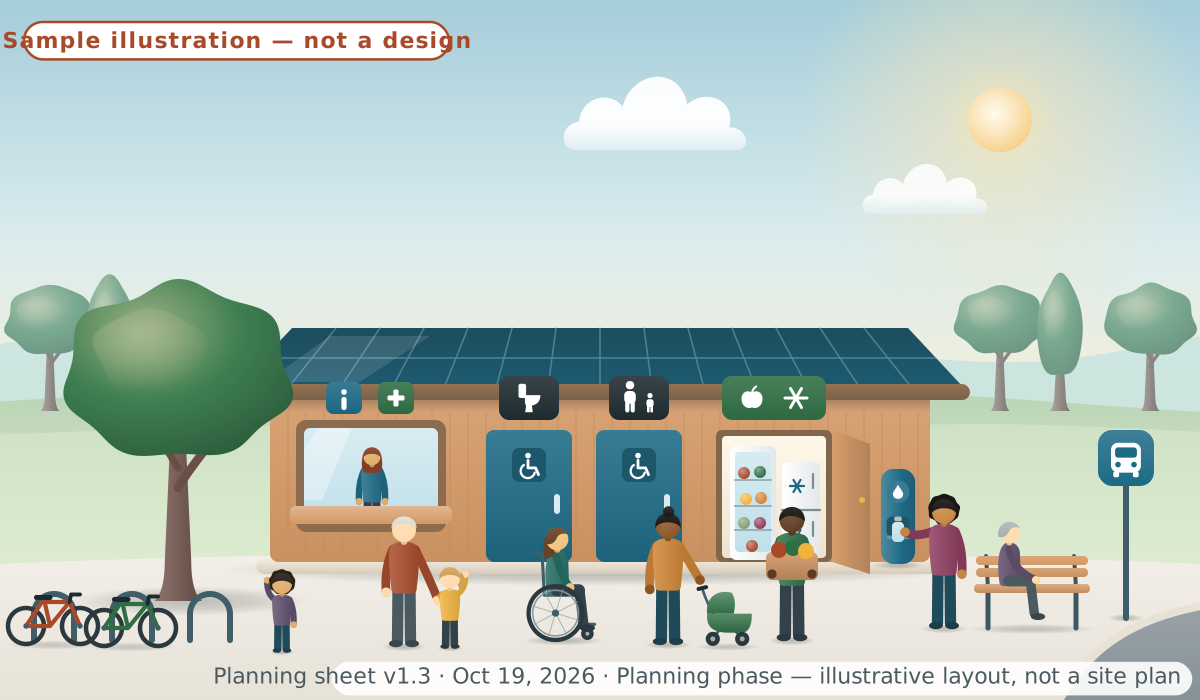
Welcome HubModern, accessible restrooms with all-gender and family rooms, free water refill, and a food and water hub with shared fridges and freezers.Sample illustration — not a design Scale A · Small Public Discovery Park (pilot)
In short
The plan in a minute, from the executive summary.
- What it is
- A free, welcoming community park where people can play, learn and enjoy nature together. It would start with a pilot of about 5 to 15 acres: inclusive play, gardens, a walking loop, a lawn, restrooms and free water. The pilot would have no rides; a carousel and family rides would be considered only if it meets its targets, and may never happen.
- Who it helps
- Children, teens, adults, families and seniors, with accessible routes and sensory-friendly hours. Entry to the grounds would be free every day, with no income tests.
- Where
- Greater Bethlehem and the Lehigh Valley, Pennsylvania. Desk research shortlisted places to ask about.
- What it needs
- Before a pilot: a willing landowner, community support, a market study, a credible operating budget, a check that no existing park or facility meets the need, and a written cleanup and restoration plan if it stops. A public partner, the host municipality and state agencies must also agree. Running costs need steady public support, not donations.
Three possible sizes, starting small
The plan starts small. Each step must pass a decision gate before the next, and the largest size would happen only if proven demand, sufficient land, an operating surplus and an environmental review all support it. Acre figures are rough planning ranges from early test layouts, not promises.
Small Public Discovery Park (pilot)
Inclusive playgrounds, a native meadow and gardens, a walking loop, a lawn for music, films and seasonal events, restrooms, first aid and free water. No mechanical rides. Free to enter.
Family Attraction Park
Adds a carousel pavilion, a few gentle family rides, an accessible lookout hill, a Discovery Barn for science and local history, food with clear allergen labels, and shaded places to gather.
Larger Regional Park (only if justified)
Could add a nature preserve and trails, a four-season Discovery Hall, an amphitheater and festival meadow, and more rides only if people really use the first ones.
Four tests every idea must pass
Our projects share one purpose: Make essential things simpler, more accessible, less wasteful, and affordable or free wherever practical. We state any trade-off openly.
Simpler
Fewer steps, plain words.
More accessible
Anyone, any age, any ability.
Less wasteful
Reuse before new.
Affordable or free
Cost never keeps anyone out.
Where things stand
Current stage: Planning phase
- Planning phase (current stage)
- Design
- Building
- Open
Planning phase. An independent plan; nothing is funded or built yet.
So far there is desk research, a feasibility brief and planning drawings. No landowner has confirmed a site in writing. Nothing has been agreed in writing with the City or with any landowner or agency. Nothing has been engineered or funded.
Read the roadmap and its decision gates
Known, with sources
- Several sites that look empty are already sold, cleared for other uses or limited by deeds.
- Bethlehem’s 2026 parks plan heard demand for inclusive play and splash pads.
- Public carousels elsewhere charge about $2–$4 a ride.
- Broome County, NY has kept six carousels free for about a century.
- Pennsylvania rides need yearly state registration, certified inspections and insurance.
Unknown, still to check
- Which landowner, if any, would host a park, and on what terms.
- How many people would come, and how often.
- Flood zones, wetlands, soil and utility capacity at any real site.
- Real costs, which need professional estimates.
Kindness first, honest about costs
Free is the goal, including rides. Grounds, playgrounds, gardens, paths, drinking water and restrooms would be free every day, paid for by park income and committed public support. Rides would be free whenever someone reliably gives or pays for them. Otherwise they would stay as low as possible: about $2–$4 a ride, the range other public carousels charge, with free-ride days. Something is only free when someone reliably gives it or pays for it, so we would name who before promising it, and keep a backup for anything critical. Some costs remain whatever happens: ride insurance, state registration and inspections every 30 days, parts and maintenance, water, sewer and electricity, and trained ride operators aged 16 or older. Safety never waits on a gift.
You could also help in a role you choose, like garden helper or event greeter, and switch whenever you like. Trained roles, such as first aid or ride operator, need full training and a sign-off from someone else, and rides would be run by trained, paid staff.
Help shape it
Tell us what your family would love to do, what worries you, and what places we have missed. We especially want to hear from children, teens, parents, grandparents, neighbors and people with disabilities.
Share an idea